Sydney Airport Terminals
All the information featured on this page was compiled and written by David Enrich, a renowned expert in aviation and airport guides since 1999.
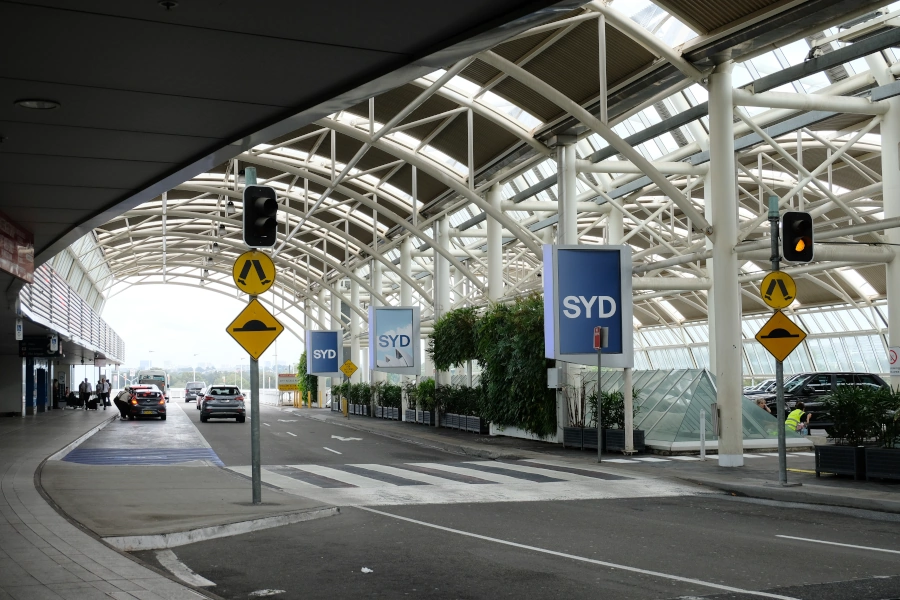
Sydney Airport, officially known as Sydney Kingsford Smith Airport (SYD), is Australia’s busiest airport and a major gateway for international and domestic travel. Located in Mascot, near Botany Bay, the airport began as a simple grassy airfield in 1919, established by aviator Nigel Love, and has since grown into a modern aviation hub serving millions of passengers annually.
Sydney Airport has three passengers terminals: Terminal 1, Terminal 2 and Terminal 3.
Origins and Development
The airport was originally a private venture but was acquired by the Commonwealth Government in 1923. Regular commercial flights started in 1924, and the airport was renamed in honor of pioneering Australian aviator Charles Kingsford Smith in 1936. Over the decades, Sydney Airport has undergone significant expansions, including the opening of the International Terminal in 1970 and the addition of a third runway in 1994, which helped accommodate increasing passenger numbers. The airport was privatized in 2002 and continues to be a key player in Australia’s aviation industry.
Current Status
Today, Sydney Airport is recognized as one of the world’s busiest and most efficient airports. It serves over 40 million passengers each year and is a hub for both Qantas and Virgin Australia. The airport has undergone multiple redevelopment projects to enhance passenger experience, including expanded terminals, upgraded baggage systems, and improved shopping and dining options.
Terminals Overview
Sydney Airport has three main terminals:
- Terminal 1 (International): Opened in 1970, this terminal handles all international flights and is equipped with modern facilities, including duty-free shopping, lounges, and a wide range of dining options. See Terminal 1 information
- Terminal 2 (Domestic): Originally opened in 1939–1940, this terminal primarily serves domestic flights for Qantas, Jetstar, and other Australian carriers. It has been modernized several times and offers a variety of services and amenities. See Terminal 2 information
- Terminal 3 (Domestic): Opened in 1974, this terminal is mainly used by Virgin Australia and other domestic airlines. It features a spacious check-in hall and direct access to the airport’s transport links. See Terminal 3 information
Sydney Airport continues to play a vital role in connecting Australia with the world and remains a symbol of the country’s aviation history and growth.
It has three passenger terminals:
Transfer between terminals
Both Terminal 2 and Terminal 3 are at a short walking distance (no longer than 7 minutes), while Terminal 1 is slightly far from them.
To transfer between the International Terminal to Domestic Terminals there are the following means of transport available:
Airport Link Train
Transfer between T1, T2 and T3. Opening hours: 05:00 am to 00:00 am, travel time 2 minutes. Fare is $6.70 AUD.
T-Bus
Shuttle buses between T1 and T2. The ride takes 10 minutes and works between 06:00 am and 08:50pm. It is free of use.
Taxi
Transfer between T1, T2 and T3. Total ride time is 10 minutes. Fare is between 17.00 and 22.00 AUD.
Domestic airlines transfers
Qantas Seamless Transfer: Between Qantas and International flights.
Virgin Blue Seamless Transfer: Between Virgin Blue & Pacific Blue, Polynesian Blue and Virgin Australia flights.
For more information about airlines transfer, please contact your airline.
Find more information here.